Construction fasteners — including mechanical anchors, chemical anchors, and cast-in channels — are among the most safety-critical components in modern building and infrastructure. A single anchor failure can trigger catastrophic consequences: falling facades, collapsing ceilings, or structural collapse. Rigorous, standards-based testing is the only way to ensure these products perform as declared throughout their service life.
What Are Construction Fasteners?
In the context of European construction product regulation, "fasteners" encompasses a broad family of products used to connect structural and non-structural elements to concrete, masonry, steel, or timber substrates. The principal categories include:
- Mechanical expansion anchors: Torque-controlled and displacement-controlled anchors that develop their holding force through friction and mechanical interlock against the borehole wall.
- Undercut anchors: Anchors that create a form-fit connection by undercutting the base material, offering high resistance to cracking and seismic loads.
- Bonded (chemical) anchors: Threaded rods or reinforcing bars installed with injectable resin systems (epoxy, vinylester, polyester, or hybrid) that bond to the concrete substrate.
- Concrete screws: Self-tapping fasteners that cut a thread directly into pre-drilled holes in concrete.
- Cast-in channels and headed bolts: Fasteners embedded during concrete placement, providing adjustable connection points for subsequent attachments.
- Plastic anchors for ETICS: Specialised fasteners for fixing external thermal insulation composite systems, assessed under EAD 330196-02-0601.
The Regulatory Framework: EADs and Harmonised Standards
Construction fasteners for use in concrete are primarily assessed under European Assessment Documents (EADs) issued by EOTA. The key assessment documents include:
- EAD 330232-01-0601 — Mechanical fasteners for use in concrete (covering expansion anchors, undercut anchors, concrete screws, and headed bolts)
- EAD 330499-01-0601 — Bonded fasteners for use in concrete (covering chemical anchor systems)
- EAD 330196-02-0601 — Plastic anchors for ETICS fixation
These EADs replaced the former ETAG 001 (mechanical anchors) and ETAG 029 (ETICS anchors). All new ETAs and renewals must reference the current EADs. Complementary harmonised standards such as EN ISO 898-1 (mechanical properties of bolts) and EN 1090-2 (execution of steel structures) further define material and installation requirements.
Essential Characteristics Assessed
Regardless of fastener type, the EADs require assessment of the following essential characteristics:
- Tensile resistance (NRk): Characteristic resistance to axial pull-out, pull-through, concrete cone, and splitting failure modes.
- Shear resistance (VRk): Characteristic resistance to transverse loading, including steel failure, pry-out, and concrete edge breakout.
- Displacement behaviour: Load-displacement curves under tension and shear, including displacement at service load and at characteristic resistance.
- Suitability for cracked and non-cracked concrete: Performance verification in concrete with and without cracks (crack width typically Δw = 0.3 mm or 0.5 mm).
- Minimum member thickness and edge distances: Geometric limits for safe installation and load transfer.
- Durability: Corrosion resistance classification (carbon steel, hot-dip galvanised, or stainless steel grades A4 or HCR).
- Fire resistance: Load-bearing capacity under standard fire exposure (EN 1363-1), assessed for specified fire resistance periods (R30, R60, R90, R120).
- Seismic performance: Qualification for use in seismic zones according to EOTA TR 049, including performance categories C1 and C2.
Key Test Methods
Fastener testing programmes are among the most extensive in construction product assessment. Testing is conducted in controlled concrete specimens cast to specified strength classes (typically C20/25 to C50/60).
Tension Tests
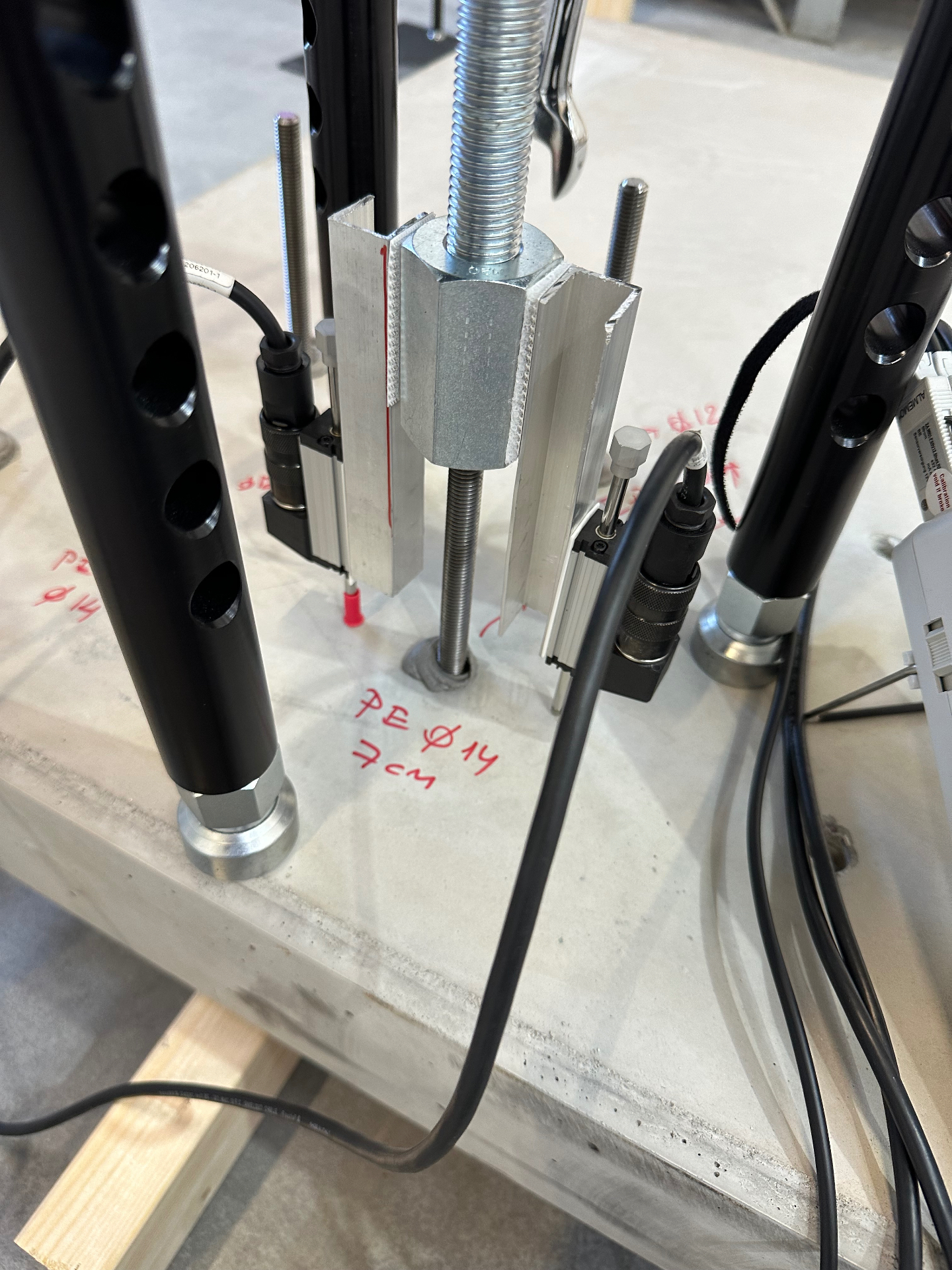
The anchor is installed in a concrete test member and loaded axially until failure. The test setup uses a reaction frame positioned at a defined distance from the anchor axis to avoid confinement effects. Load and displacement are recorded continuously. Tests are performed in both non-cracked and cracked concrete, with crack widths maintained by external loading of the specimen. Multiple failure modes are evaluated: steel failure, pull-out, concrete cone, splitting, and combined cone/pull-out.
Shear Tests
Shear loads are applied perpendicular to the anchor axis using a standardised loading device. Tests include loading towards and away from a free edge to evaluate concrete edge breakout capacity. Pry-out failure is assessed for short, stiff anchors. The influence of hole clearance between the bolt and the fixture is characterised to determine load distribution in groups.
Combined Tension and Shear
Anchors in real applications often experience simultaneous tension and shear. Interaction testing verifies performance under combined loading. Results are plotted against interaction diagrams to validate design equations.
Sustained Load (Creep) Tests for Chemical Anchors
Bonded anchors are particularly susceptible to creep at elevated temperatures. Long-term sustained load tests at maximum service temperature (typically +40 °C to +80 °C depending on use category) verify that displacement remains within acceptable limits over the design service life. These tests can run for months under controlled environmental conditions.
Freeze-Thaw Cycling
Anchors in external applications must withstand freeze-thaw cycles without degradation. Specimens are subjected to repeated cycles between −20 °C and +20 °C in water-saturated conditions, then retested for residual pull-out capacity.
Fire Resistance Testing
Anchors are loaded to a defined service load and exposed to the standard temperature-time curve (EN 1363-1). The fire resistance period is the time to failure or excessive displacement. Testing covers tension, shear, and combined loading under fire conditions.
Seismic Qualification Testing
Seismic testing subjects anchors to alternating crack opening/closing cycles combined with tension and shear loading. The protocol follows EOTA TR 049 and evaluates whether the anchor maintains its load-bearing capacity and ductility after seismic simulation cycles. Performance categories C1 (low seismicity) and C2 (high seismicity) have different qualification requirements.
AVCP System and Certification
Construction fasteners assessed under EADs fall under AVCP System 1 as defined by the Construction Products Regulation (EU) No 305/2011. This requires:
- Type testing — performed by an accredited testing laboratory (ISO 17025)
- Factory production control (FPC) certification — initial inspection and continuous surveillance by an accredited certification body (ISO 17065)
- Certificate of constancy of performance — issued by the certification body on the basis of type testing and FPC assessment
The manufacturer draws up the Declaration of Performance (DoP) and affixes CE marking on the basis of the ETA and the certificate of constancy of performance.
Factory Production Control for Fasteners
FPC requirements for fastener manufacturers are detailed and product-specific. Key controls include:
- Incoming material inspection: Verification of steel grade, surface treatment, and dimensional tolerances for all metal components
- Chemical component control: For bonded anchors — batch testing of resin components including gel time, cure time, glass transition temperature, and bond strength
- Dimensional inspection: Statistical process control of critical dimensions including diameter, thread pitch, expansion geometry, and drill bit tolerances
- In-process testing: Torque testing, hardness verification, and surface treatment thickness measurement (e.g., zinc coating per EN ISO 1461)
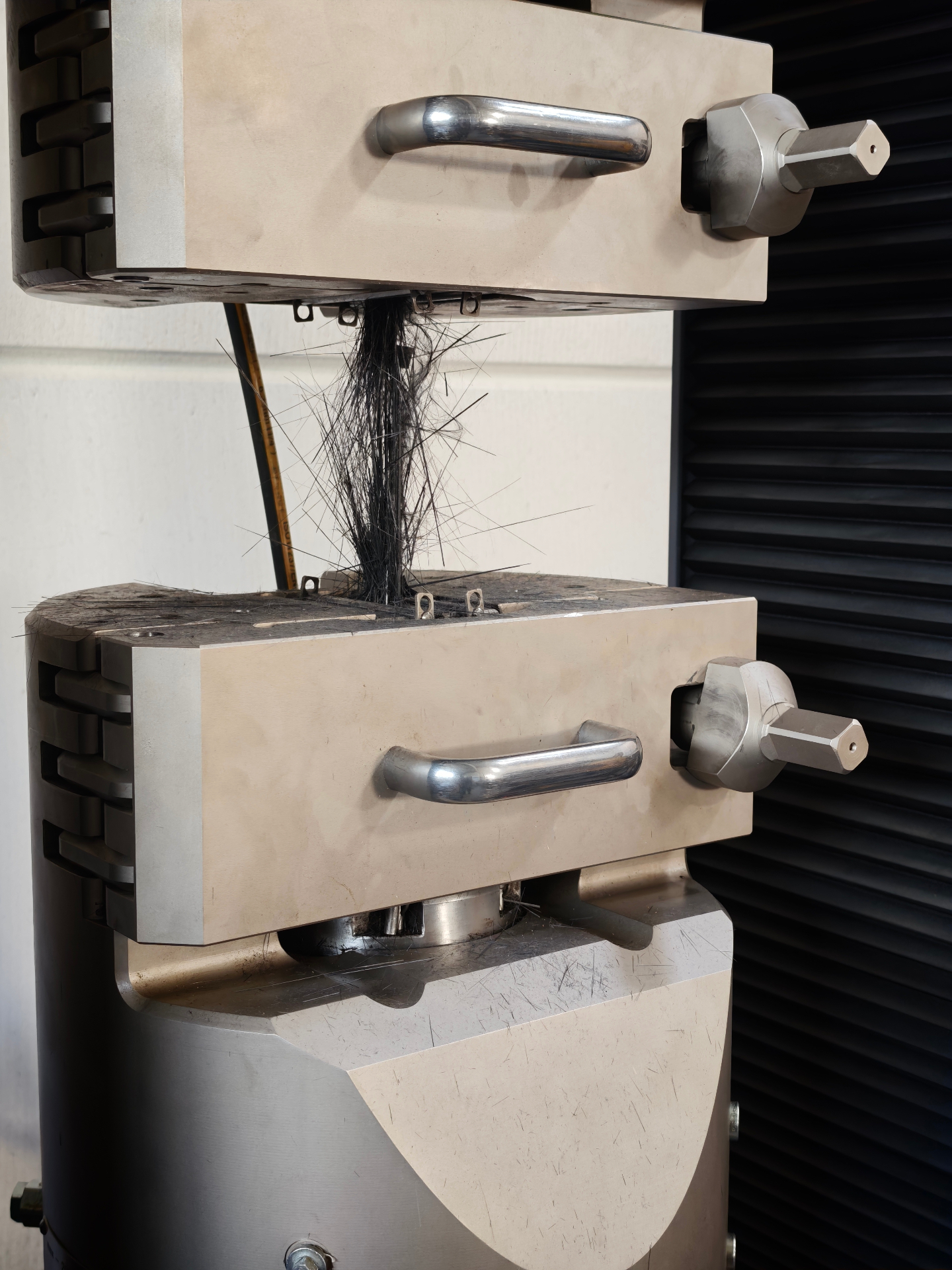
- Finished product testing: Tensile proof-load testing on samples from each production batch
- Traceability: Full batch traceability from raw material to packaged product, including production date coding
Common Failure Modes: What Testing Prevents
Fastener failures in the field can have severe safety consequences. Testing under the EAD framework is specifically designed to identify and prevent these failure modes:
- Concrete cone failure: Shallow embedment or insufficient edge distance causing a conical concrete fracture surface — prevented by testing at minimum embedment depths
- Pull-out/pull-through: Insufficient friction or mechanical interlock — identified through systematic tension testing in cracked and non-cracked concrete
- Splitting failure: Expansion forces exceeding the tensile capacity of thin concrete members — characterised by testing at minimum member thicknesses
- Steel failure: Tensile rupture of the bolt or rod — verified against declared steel grades under EN ISO 898-1
- Creep failure of chemical anchors: Progressive displacement under sustained load at elevated temperature — prevented by long-term creep testing
- Loss of preload: Relaxation of clamping force over time — assessed through sustained torque and tension testing
- Corrosion-induced failure: Degradation in aggressive environments — prevented by specifying appropriate corrosion protection classes
How Amstelfy Supports Fastener Manufacturers
Amstelfy provides end-to-end support for construction fastener manufacturers seeking European market access:
- Accredited testing (ISO 17025): Complete type testing programmes covering tension, shear, combined loading, sustained load, freeze-thaw, fire, and seismic qualification — all performed in our own laboratory facilities.
- FPC certification (ISO 17065): Initial inspection and ongoing surveillance of factory production control systems, leading to the certificate of constancy of performance required under AVCP System 1.
- ETA consultancy: Support with ETA applications, test programme planning, liaison with Technical Assessment Bodies, and documentation preparation.
- Product development support: Performance benchmarking, competitive analysis, and optimisation testing to help manufacturers develop superior fastening solutions.
Whether you are launching a new anchor system, extending an existing ETA to additional sizes or base materials, or transitioning from ETAG 001 to the current EAD framework, our team guides you through every stage of testing, assessment, and certification.